
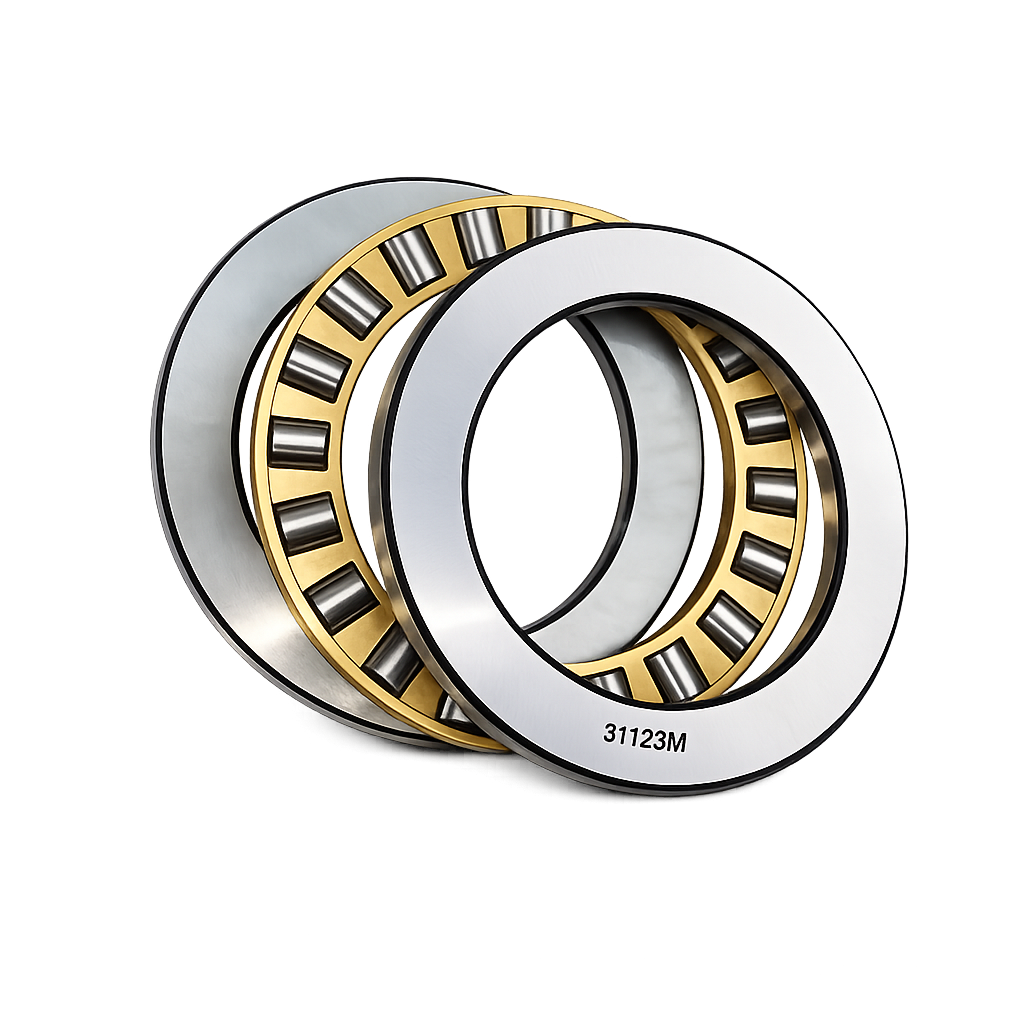
Roller Thrust Bearing
₨ 675.00
-
Type: Roller thrust bearing
-
Load: Very high axial/thrust load; minimal radial load capacity
-
Cage: Typically steel or brass (depending on series)
-
Performance: High stiffness, excellent heavy-load handling; best for low–moderate speeds
-
Construction: Thrust washers + rollers + cage (often separable)
-
Use cases: Screw jacks, presses, extruders, rotary tables, cranes/hoists, heavy gearboxes
-
Note: Needs good alignment and rigid mounting surfaces; not a replacement for radial bearings.
Roller thrust bearings are designed to carry very high axial (thrust) loads with excellent rigidity, making them ideal for heavy-duty applications where loads push along the shaft direction. Using rollers instead of balls increases contact area, improving load capacity and reducing deformation under load—especially in slow-to-moderate speed systems.
Key Features
-
Very high axial load capacity (roller contact)
-
High stiffness for stable axial positioning
-
Better suited for heavy loads than thrust ball bearings
-
Available as cylindrical roller thrust or tapered roller thrust designs
-
Typically separable for easier installation and maintenance
Common Applications
Screw jacks, presses, extruders, cranes/hoists, rotary tables, heavy gearboxes, vertical shafts, and industrial turntables.
Selection Notes
Roller thrust bearings are primarily for axial loads and have limited radial load capacity (unless using specific combined-load designs). Match bore/OD/height, confirm required axial load direction, and choose cage/material and lubrication based on speed and operating temperature. Ensure mounting faces are flat and rigid to prevent uneven loading.
Additional information
| Bearing RPM Rating | |
|---|---|
| Bearing Seal Type | Shielded |
by Coen Jacobs
This album gets a bit boring after you\’ve listened to it more than once. Worth that first listen though.